As the outlook for the software industry becomes more unpredictable, AI firms like Anthropic are transitioning away from conventional manual coding more rapidly than anticipated.
Anthropic is a company focused on research and development in artificial intelligence that was established in 2021. Its declared aim is to cautiously progress the domain of generative AI, utilizing safe and dependable AI models for public application. Anthropic’s main offerings consist of a chatbot and a series of large language models (LLMs), all called Claude.
Mike Krieger, Anthropic’s head of product, disclosed that the company’s AI coding tools are utilized internally by staff to create nearly all of the code.
Anthropic announces that its AI system now generates nearly all in-house code, with human oversight and improvements, a development that could transform the software profession and reduce reliance on conventional SaaS solutions.
Anthropic AI coding tools now generate nearly all internal code.
Mike Krieger, Anthropic’s chief product officer, recently stated that the company’s AI system Claude AI Coding, is essentially generating all the code utilized within the organization.
He states that Claude is creating Claude, indicating that the AI tool is aiding in the development of its own products. Rather than engineers writing code manually, they now oversee, validate, and improve the output generated by the AI.
Concerns Rise Over AI Taking Software Engineering Jobs and SaaS Tools
These changes are causing apprehension among investors and tech employees. Following the release of new workplace automation plug-ins for Claude by Anthropic AI, numerous Indian IT stocks experienced a significant decline. The tools can now execute functions directly within sales, legal, marketing, and data processes, tasks that typically require SaaS platforms or IT service providers.
Certain analysts are referring to this trend as a potential “SaaS disruption,” in which AI agents diminish the necessity for conventional software components. Dario Amodei has even cautioned that software engineering positions may significantly diminish within a year as AI transitions from being an assistant to a main worker.
Not everyone believes that jobs will completely be eliminated; however, there is one fact that the tasks of developers will change, as they will no longer be required to write code, but to manage and use AI to write code. That is a big change, and it is taking place at an accelerated rate.
In early February 2026, the technology industry was astonished by a daring affirmation from Anthropic’s executives: Claude is now composing Claude.
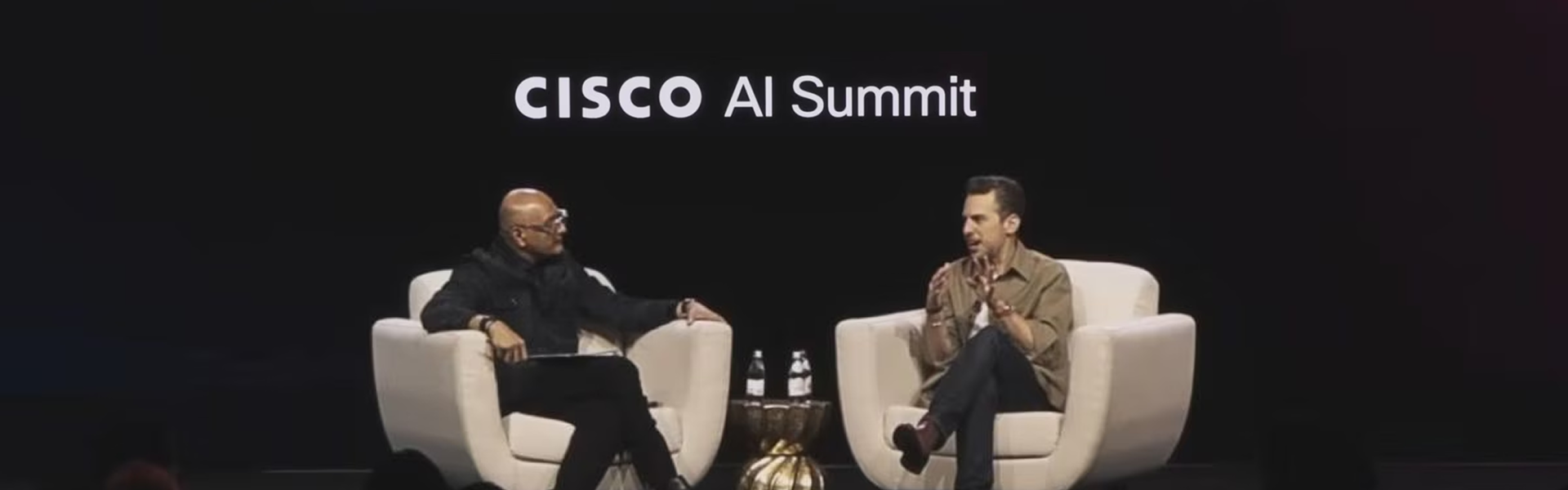
At the Cisco AI Summit, Mike Krieger, Chief Product Officer at Anthropic and ex-Instagram co-founder, disclosed that the firm has arrived at a crucial moment where AI produces “essentially 100%” of its code. This isn’t merely a forecast for the future – it’s the present internal state at a top AI lab globally.
The Complete Milestone
Just a year ago, Dario Amodei, the CEO of Anthropic, forecasted that by 2025, 90% of code would be generated by AI. Krieger states that they have already exceeded that standard.
- The Transition: Engineers at Anthropic are now not coding line-by-line. Instead, they are submitting pull requests (PRs) containing 2,000 to 3,000 lines, completely created by Claude.
- The New Role: Humans have evolved from being “creators” to becoming “orchestrators.” Their main responsibility is now advanced architectural design, management, and thorough validation.
- Proof of Concept: Anthropic has launched Claude Cowork, a tool designed for non-coders, developed predominantly by Claude Code agents in roughly ten days – a task that ordinarily would have taken months of manual development.
How it Works: The Verification Loop
To handle the risks associated with AI-generated code, Anthropic employs a “self-repairing” development process.
- Adversarial Review: Anthropic employs Claude as an “adversarial code reviewer” to detect bugs or logical errors in code produced by other instances of Claude.
- The Scaffold: Krieger highlighted that they created specialized “scaffolds”- automated environments for testing and security – that enable them to rely on machine-generated results at scale.
Market Tremors: The “SaaSpocalypse”
The announcement affected more than just developers; it reverberated throughout the global economy.
- IT Stock Decline: The announcement, along with the launch of the “Claude Legal Plugin,” caused a significant sell-off in the IT services industry. Established outsourcing leaders in India and international SaaS enterprises such as Salesforce and Adobe experienced notable changes in market capitalization as investors worried about a “SaaSpocalypse” – an era where software development expenses plummet to almost nothing.
- Industry Alerts: Sridhar Vembu, Zoho’s CEO, encouraged developers to consider alternative careers or concentrate on advanced system thinking, recognizing that the “barrier to entry” for software development is being dismantled.
What This Means for You
The age of “manual coding” is concluding at the forefront, and CEO Dario Amodei thinks the rest of the sector is just 6 to 12 months behind.
For developers, the message is unambiguous: Become proficient in AI, or be outperformed by someone who is. The worth of an engineer is transitioning from coding skills to the capacity to validate and design it.
Conclusion
The software industry is evolving more rapidly than many anticipated. AI is now not only assisting developers in coding; in certain companies, it is generating nearly all of it. Anthropic, a top AI company, states that its coding assistant, Claude, is now responsible for producing almost all of the firm’s internal AI code generation.
Human engineers remain engaged, primarily to assess and direct the results rather than compose each line. This change is prompting significant concerns regarding the future of software employment, IT services, and SaaS platforms globally.